WorkSafe has released new guidance materials for employers and duty holders in temporary traffic management. The guidance provides practical information to duty holders about how to comply with their duties under the OHS Act and OHS Regulations.
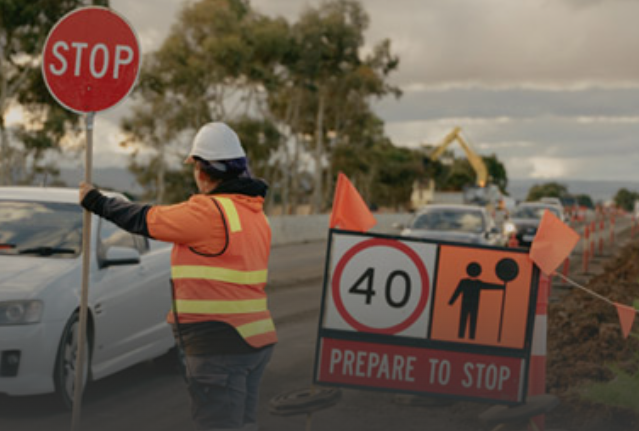
The guidance addresses traffic management on or near public roads, broken down to cover six key topics –
- Health and safety in temporary traffic management
- Risk management in temporary traffic management
- Temporary traffic management classed as construction work
- Controlling hazards in temporary traffic management
- Facilities and the work environment for temporary traffic management
- Responding to emergencies in temporary traffic management
The risks and hazards associated with working on or near roadways deserve close and ongoing attention before, during and after works are undertaken.
Early this year SafetyNet reported on the death of a traffic controller on the Western Highway who was struck by a passing truck as he collected signs at the end of work, highlighting the potential severity of risks that employees face when working on or near public roads.
When planning any work on or near a road employers must identify all of the hazards associated with the work and understand the potential harm. This means ongoing inspections of the workplace - reviewing information from industry bodies, regulators and specialists – consulting with employees, key site personnel, community and road users, local government, business and residents.
Look at all parts of the developing workplace – physical work environment, machinery and equipment, materials and substances, work tasks and systems of work, work design and management, and the human behaviour of employees and road users.
Employers and HSRs are encouraged to review the temporary traffic management guidance before undertaking any work on or near roadways.
Read more: WorkSafe Victoria | Traffic Management