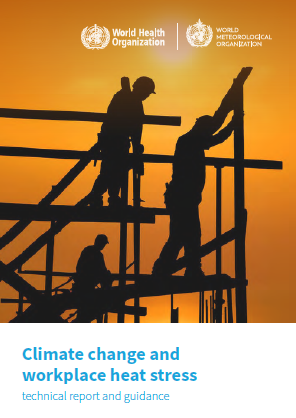
The World Health Organisation (WHO) has released its Climate change and workplace heat stress: technical report and guidance – updates to its previously issued guidance are long overdue, with the last WHO guidance being published in 1969.
The World Meteorological Organization has reported that 2024 was the warmest year on record, with the global temperature averaging 1.45°C above pre-industrial levels. The past ten years (2015–2024) have been the warmest on record, underscoring the continuing long-term trend of rising global temperatures due to climate change.
In addressing those rising temperatures, the WHO report provides evidence on the challenges and risks associated with workplace heat stress in the context of climate change. It looks at the physiological, socioeconomic and mental health impacts of workplace heat stress and offers evidence-based guidance for prevention and mitigation.
It highlights the health and productivity risks faced by billions of workers across the world, especially in manual labour sectors. Here in Australia, we are increasingly seeing the impact of excessive heat in the workplace.
In the presence of heat stress risks, the WHO recommends workplaces develop and implement Occupational Heat Action Programmes (OHAP) to manage risks. OHAPs should be developed in consultation with key stakeholders including managers/employers, workers, trade unions, representatives of self-employed persons, safety experts, health and safety representatives, occupational health experts, and representatives of local community authorities.
On a community-wide level, the WHO recommends:
- training of first responders, health experts, employers and workers about mild and severe health outcomes associated with workplace heat stress.
- development of occupational heat-health policies, plans and other information to address location-specific weather characteristics and workers.
The report concludes that exposure to heat has become a common problem for almost half the global population, as they live in areas where high environmental temperatures affect nearly all daily activities. In the context of climate change, exposure to workplace heat stress will further increase. The WHO also observes that policies and actions to reduce the extent of climate change will significantly contribute to protecting working populations from excessive heat in the future.
The report and guidance offer employees and employers the opportunity to better understand the realities of climate change, the effects on our physical and mental health and the effects of climate in occupational settings. It outlines the development of OHAPs, how to assess and monitor for heat stress in your workplace and suggests methods of control to mitigate the impact of heat on workers.
In the lead up to our Australian summer we must be actively working with our employers now to develop a heat policy to ensure that our workplaces are safe – working in heat can lead to workers suffering serious illness and can also lead to increased safety incidents.
You can find information about an HSR Action Plan on our OHS Reps Heat page, as well as a hierarchy of suggested controls for heat here. WorkSafe Victoria’s Compliance code: Workplace facilities and the working environment also covers the topic of temperature in the workplace.
Read more: WHO / WMO | Climate change and workplace heat stress: technical report and guidance