Swedish researchers have studied whether the known respiratory risks of welding fumes become even more pronounced among workers who have been exposed to COVID – and the bad news is, they do.
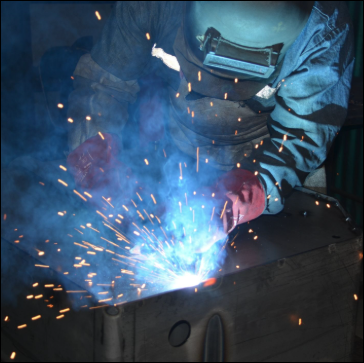
We have long been aware of the risks associated with welding fumes and know that workers who are exposed to welding fumes can suffer a number of short and long-term health effects ranging from eye and respiratory irritation to asthma, metal fume fever, nervous system damage and lung and kidney cancer. In March 2017, the International Agency for Research on Cancer (IARC) re-classified welding fumes from a Group 2B carcinogen (possibly carcinogenic to humans) to a Group 1 carcinogen (carcinogenic to humans).
Welding fumes constitute a mixture of airborne gases and various particles that are harmful to the respiratory tract. A large proportion of the particles formed during welding are nano-sized, small enough to reach the small airways (internal diameter < 2mm) and even the alveolar region, if inhaled.
The way our bodies remove particles from our large airways is by small hair-like cilia propelling particles trapped in mucous towards the pharynx, where they are swallowed and expelled. As our airways narrow there are less cilia and by the time they are as small as the terminal bronchiole in the alveolar region, there are no cilia. Inhaled nano-sized particles that reach this area may be trapped there, initiating an inflammatory response and resulting in airway obstruction and lung disease.
Cells in our alveolar regions are targets for the virus that causes Covid-19 and infection results in a reduction of alveolar cells and the composition of the small airway lining fluid, contributing to impaired small airway function that may persist long after acute Covid-19 is over.
The researchers hypothesised that the effects of welding fumes on our small airways may be more pronounced in individuals who have previously been infected with Covid-19. Welders’ lung health is often monitored by spirometry. However, spirometry is insensitive to dysfunction in the small airways, and so is not useful for early detection of disease in this setting. Oscillometry and multiple breath washout (MBW) are two lung function tests that do sensitively measure small airway function and therefore were selected as the methods for use in this study.
The results showed that welding-fume-exposed individuals with prior COVID-19 had more pronounced small airway impairment, as assessed by multiple breath washout (MBW), than exposed workers with no COVID-19 history. Small conducting airways seemed to be the major site for small airway obstruction in welding-fume-exposed individuals with a history of COVID.
Despite the small size of the study sample, the research results highlight the urgency of reducing welding fume exposure in individuals with a history of Covid-19. With approximately 16.5 million welders worldwide, and a significant proportion of them having a history of Covid-19 infection, the study findings point to an even greater need for strengthened workplace controls and for risk assessments to consider the potential Covid history of employees.
You can learn more about the risks of welding fumes at our Welding - what are the issues? - OHS Reps page, as well as at WorkSafe’s Controlling exposure to welding fumes | WorkSafe Victoria.
Read more: Welding fumes and SARS-CoV-2: a dangerous combination