In 1882 the very first women’s union in Australia was formed - the Tailoresses’ Association of Melbourne. Upon formation the Tailoresses’ Association immediately embarked on a strike that helped redefine the relationship between employees and employers around the time of Australia’s federation.
The descriptions of the tailoresses’ work (as seen in Trove documents here and here) detail not just low wages, but workplace conditions that presented risks such as hazardous manual handling, high job demands, low control, poor support, poor physical environment, inadequate reward and recognition, and poor organisational justice – hazards that workers and their unions are still fighting today.
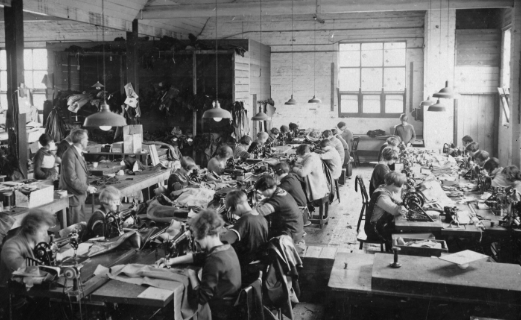
In July of 1874 there had appeared in the Age newspaper a letter to the editor, signed ‘Song of a Shirt’, in which the piece-payment practices of various clothing manufacturers and their treatment of workers were described. The letter detailed repeated wage cuts, requiring women to work longer and longer hours and to take work home just to maintain an income that was significantly lower than in male occupations of the time. Women were needing to work up to 16-hour days to complete work requirements, with employers routinely changing the ‘rules’, and sacking women who objected. Employers published their objections, claiming that the rates quoted in the Age article were incorrect.
On Tuesday 5 December 1882, having just been informed that their piece rates were to be reduced even further, more than 300 women employed at Messrs. Beath, Schiess and Co. put down their work and walked out, beginning what has been called ‘Melbourne’s first major strike’.
Before the proposed reduction, a trouser hand could make 25 shillings a week, but only if she took home extra pairs at night. On the new rates, she would have struggled to make 20 shillings. At this time the average wage for a junior baker or a shopman was approximately 40 shillings per week – often with rations included. Stonemasons, bricklayers and carpenters were earning 50 to 60 shillings per week, working 10 to 11 hours per day.
The tailoresses' catalogue of suggested piece rates became known as a “log of claims” – phraseology still used by today’s unionists in negotiations with bosses. The striking tailoresses won broad labour movement support and were successful in securing notable improvements to their wages and conditions.
The work of maintaining pressure on employers to ensure that workplace conditions and wages are not eroded is clearly just as important for us today as it was for the tailoresses of Melbourne in 1882. If you haven’t already, join your union today and join with workers fighting to maintain our workplace safety rights.
Read more: We Are Union | Early Strikes