Work processes in industries like mining, foundry, manufacturing and agriculture can release dusts, gases, fumes, vapours, or mists into the air. These are known as airborne contaminants, and they cannot always be smelled or seen.
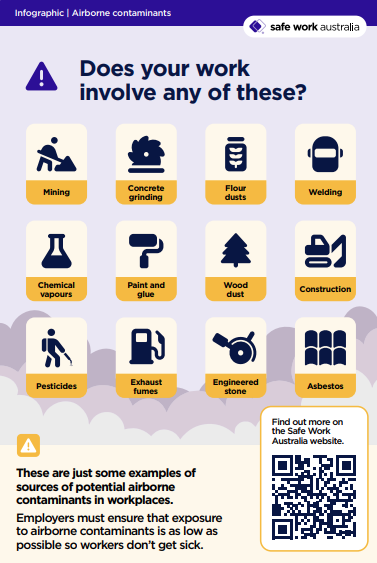
Safe Work Australia’s new airborne contaminants hub provides practical information to help employers and workers:
- recognise what airborne contaminants are and how they can impact health
- understand employer OHS duties and how to manage risks from airborne contaminants
- learn about workplace exposure limits and what employers need to do to prepare for the changes on 1 December 2026
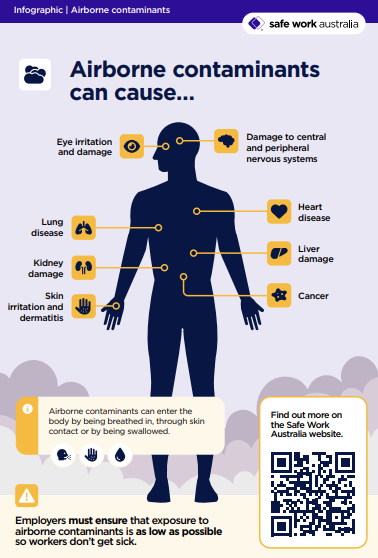
Visit the new hub for easy-to-use resources, including downloadable infographics, information on what you should be doing in your workplace, and a comparative table of changes coming to workplace exposure limits.
Resources include general topics and infographics, technical resources, and industry resources for agriculture, construction and manufacturing.
Information and resources on the hub can help you to understand more about airborne contaminants, how to manage them, and the up-coming changes to workplace exposure standards.