WorkSafe reminds employers and self-employed persons about their duty to control the risks associated with using concrete-placing equipment such as truck-mounted concrete-placing booms. There has been an increase in roll-overs and other safety incidents involving concrete-placing equipment recently, including a NSW employee being killed and another employee suffering life-threatening injuries when a truck-mounted concrete-placing boom overturned.
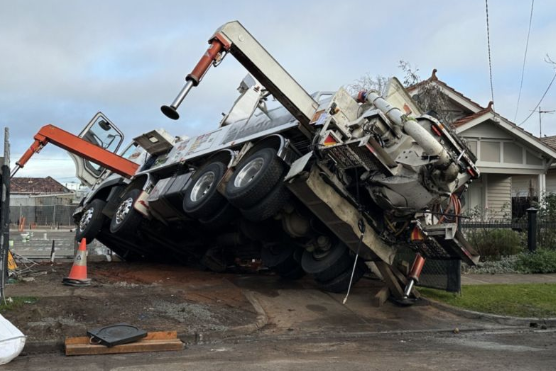
Safety issues associated with concrete-placing equipment include incorrect set-up, pipelines failing under pressure, components failing and leading to structural collapse or mechanical failure, employees accessing areas with moving parts due to modified or missing hopper grates, and the risk of equipment being used near or over powerlines.
WorkSafe recommends employers comply with their legal obligations under the OHS Act and OHS Regulations through regular inspections of concrete-placing equipment to the extent necessary to ensure that the risks associated with its use are monitored, and ensuring that operators and employees are suitably trained, competent and licenced.
Employers can source further information about their duties and responsibilities via the following documents on the WorkSafe website –
- Industry standard: Concrete pumping | WorkSafe Victoria
- Mobile concrete boom pump safety | WorkSafe Victoria
- AS 2550.15:2019 - Cranes, hoists and winches - Safe use, Part 15: Concrete placing equipment
- No Go Zones – working around energy assets | Energy Safe Victoria
- Safety alert poster - safe use of concrete-placing equipment
Read more: Safe use of concrete-placing equipment | WorkSafe Victoria