In an unusual case from the US a patient’s family member has died after being drawn into a Magnetic Resonance Imaging (MRI) machine by the 9kg metal chain he was wearing around his neck for weight training.
This incident highlights the importance of workplace safety processes considering the risks posed to people other than workers and of ensuring that safety measures are employed to keep members of the public out of high-risk areas while hazardous work is underway.
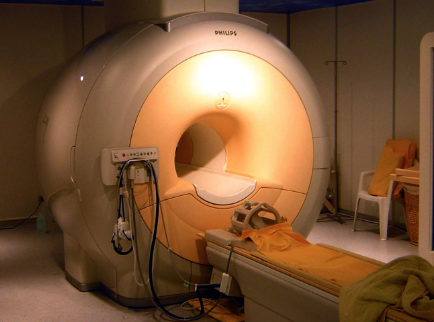
The 61-year-old man entered the MRI room at a medical centre in New York while a scan was underway. The man’s wife, who was having a scan on her knee, had asked a technician to get her husband to help her off the table. There are conflicting reports about whether the man had permission from the technician to enter the room.
The man’s wife said that as soon as the man came within range of the magnetic field produced by the MRI machine “the machine switched him around, pulled him in, and he hit the MRI”. The MRI’s force continued to tighten the chain around his neck and torso. The man was eventually disengaged from the machine and transported to hospital in a critical condition. He died the following day after multiple heart attacks.
MRI machines use powerful magnets to create a strong magnetic field around a patient. They are very effective for imaging soft tissue such as the brain, muscles and ligaments, making it a valuable tool for diagnosing many health conditions. Unlike an X-ray or CT machine MRIs do not use ionising radiation, which means it is a safer option for patients requiring frequent diagnostic imaging.
MRI machine incidents are not unheard of – in 2001 six-year-old Michael Colombini died in New York of a fractured skull while undergoing an MRI examination when the wrong oxygen tank was brought into the room and was pulled into the MRI chamber. This was the first known MRI-related death due to a projectile.
In 2023 a Californian nurse required surgery after being pinned between an MRI machine and a bed after the magnetic force suddenly pulled the bed toward it, and earlier this year in Finland a cleaner brought a floor buffing machine into the MRI suite where it was immediately sucked into the MRI at high speed causing a million dollar repair bill. These are just a few of many reported MRI incidents worldwide.
Factors such as poor planning, inadequate staff training and failure to segregate MRI-unsafe equipment are highlighted by all of these incidents, as well as the ever-present risk of human error, complacency, lack of training or ignorance of safety protocols. Since the 2001 Colombini case the MRI community have worked tirelessly to promote safety but gaps in training and awareness still remain.
Whilst MRI use is generally very safe, when someone is hurt during an MRI the injury is almost always preventable. From the moment a patient is referred to MRI, through screening, to the scan and right up to exiting the room, safety must remain the foremost priority for all healthcare providers.
Read more: Not Another Name, Not Another MRI Accident | Smith Chason College