The Interim Report from the Victorian Government Independent Review into Employee Representation presents us with an opportunity to gain further insight into what changes employers want for the rights and powers of health and safety representatives (HSRs) and authorised representatives of registered employee organisations (ARREOs).
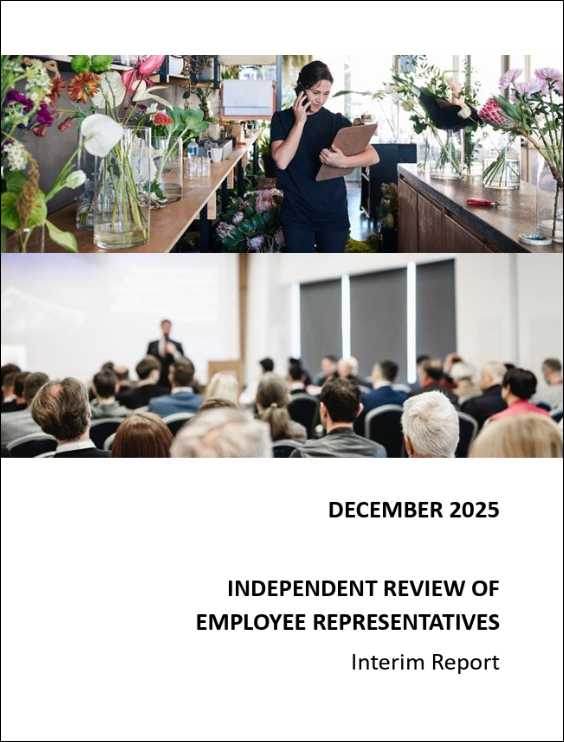
In August 2025 SafetyNet reported on the commencement of the Victorian government independent review into employee representation to consider whether the powers, functions and supports for HSRs and ARREOs are effective and deliver improved health and safety outcomes for all workers.
Submissions have been made to the review by a range of employee and employer representatives, and other interested stakeholders. The Independent Reviewer has now released their interim report, summarising what they have heard from employee and employer representatives and people with lived experience, and identifying areas for further exploration.
Whilst employees can be confident that unions stand strong in their submissions to both preserve and strengthen the employee representation framework of the OHS Act and to seek better protections for HSRs and ARREOs, this interim report presents examples of employers and their representatives seeking the opposite – news that certainly does not surprise us, but is startling in the context of the terms of reference for the review.
Unsurprisingly, some employer representatives are calling for the retrograde step of removing the OHS Act’s formal HSR and ARREO framework requirements, preferring instead direct consultation between employers and employees (with no OHS training). For example, the Australian Industry Group (AIG) has called out the role of safety champions as an alternative path to consultation – safety champions are an employer-appointed role with no legislated powers. The review’s terms of reference, however, call for an assessment of the effectiveness of current representation frameworks and the identification of opportunities to improve the effectiveness of existing HSR and ARREO powers.
Throughout the interim report there are examples of employer bodies calling for further and more specific guidance from the regulator, whilst simultaneously rejecting calls for employers to be required to have at least the same training and understanding of their duties and obligations under the OHS Act that HSRs access through their HSR initial and refresher training. Their calls for case studies, implementation tools and templates to be provided to employers shows a lack of curiosity about safety matters and a failure to seek out or access the many existing, and freely available, support materials.
Several employer representatives, including the AIG, the Victorian Congress of Employer Associations (VCEA) and the Victorian Automotive Chamber of Commerce (VACC), supported a ‘fit and proper person test’ for HSRs or ARREOs. The Australian Constructors Association (ACA) echoed this position, calling for HSRs as well as health and safety committee (HSC) members to pass a ‘fit and proper person test’, and for the appointment or election of these roles to be conducted or monitored by WorkSafe. They did not specify if the ‘fit and proper person’ requirement would also apply to management HSC members.
Aside from the fact that before a person becomes an HSR they have already been through the company’s own recruitment and vetting process to gain employment, the primary duty to ensure a safe workplace belongs with the employer and their representatives (who are also bound by s.22(2)(b) of the OHS Act requiring the engagement of ‘suitably qualified persons’), not with the HSR or HSC members.
Along with their calls for HSRs to pass a ‘fit and proper person test’, employer bodies also submitted conflicting views around HSR training.
The VACC recommended amending the OHS Act to compel an HSR to undertake training conducted by WorkSafe before being authorised to issue a PIN or a direction to cease work. The AIG also put forward a similar position, suggesting that HSRs should attend mandatory training before being able to issue a PIN or a direction to cease work. They also recommended competency-based training for HSRs.
However, the AIG also advised that feedback from employers in regional or remote locations indicated that training can result in significant travel and accommodation costs, and access issues for people with caring responsibilities. To address these concerns, they recommended consideration of options to improve access to virtual training for HSRs.
Unions have long acknowledged the benefits of in-person HSR training in building networks, providing a safe and confidential space to discuss issues, and providing concentrated time to complete their training away from their usual work responsibilities and employer oversight.
The report in its entirety makes for compelling reading, although many HSRs and ARREOs are already familiar with the tactics and arguments exercised by employers to bypass their consultation and representation obligations. Individuals and organisations that made submissions to the review now have an opportunity to respond to the interim report, and Victorian workers can be assured that your unions are committed to ensuring the voices of HSR’s and workers are heard as part of this important review.
Read the interim report here: Independent Review of Employee Representation – Interim Report
Make a submission to the review: Independent review of employee representation | Victorian Government