Indoor air quality (IAQ) is fundamental to human health, safety, and well-being, yet the challenges faced in maintaining air quality are more complex today than ever. From the impacts of climate change and extreme weather events, such as flooding and bushfires, to lessons learned from the COVID-19 pandemic, the urgency to advance IAQ research and policy has never been greater.
The World Health Organisation (WHO) states that the combined effects of ambient air pollution and household air pollution are associated with 6.7 million premature deaths annually. Particulate matter and other pollutants in air pollution inflame the airways and lungs, impair immune responses, reduce the oxygen-carrying capacity of the blood and contribute to incidences of stroke, respiratory infection, asthma, ischaemic heart disease, chronic obstructive pulmonary disease (COPD), and lung cancer. Ensuring clean air can help to prevent these negative consequences, leading to a healthier and more able life, and reducing premature death.
Earlier this month, for the first time since 1994, the Clean Air Society of Australia and New Zealand (CASANZ) brought global experts together in Melbourne to assess the current state of IAQ and drive evidence-based decision-making. A dedicated State of Indoor Air Quality Forum, led by Distinguished Professor Lidia Morawska and including Safe Work Australia CEO Marie Boland, set the agenda for an in-depth, solutions-driven discussion throughout the event.
The conference brought together leading voices from public health, occupational health, environmental science, engineering, and policy to explore the evolving IAQ landscape across all building types. The key focus was bridging the gap between public and occupational health, ensuring IAQ strategies protect both the general population and workplace environments.
Studies in the US and Canada show that 70% of workers say that it is important to them that employers are transparent about the air they breathe on the job. Unfortunately, many employers do not take the risks presented by poor IAQ seriously. More than 35% of Canadian employees report having taken personal steps to improve IAQ at work — including bringing in an air purifier, opening a window or adding plants, specifically for the purpose of improving the air. That number is highest among Millennials and Gen Z 41% and lowest among Baby Boomers 22%. More than 30% of Canadian Millennial and Gen Z workers say they would consider leaving their employer over poor IAQ.
High levels of carbon dioxide and particulate matter pollution have been shown to affect educational results in school classrooms and reduce workplace productivity, making this a vital workplace issue. Tests of closed room air show unsafe elevations of CO2 within a few hours when groups of people are present, with the simple act of opening a door or window decreasing CO2 to acceptable levels very quickly.
Indoor air quality is affected by many things, including:
- outside air pollution coming inside, such as emissions from vehicles and industry and smoke from bushfires and wood heaters
- particulate matter from sources in the building, such as wood heaters
- volatile organic compounds, such as formaldehyde, emitted from building materials and furnishings
- microorganisms like viruses, bacteria and fungi (including moulds) which can be transmitted through the air
- gases like carbon dioxide, carbon monoxide and nitrogen dioxide from sources such as gas heaters, cooktops and stoves
- tobacco smoke and vape aerosols
- dust, dust mites and pollen
- asbestos, lead, and other hazardous substances
- pollutants from domestic pets, such as pet dander
Indoor air can have much higher concentrations of some pollutants and different health risks than outdoor air. Health impacts from air pollution in indoor environments include:
- carbon monoxide poisoning from using wood or gas heaters without enough ventilation
- transmission of infectious diseases like influenza, RSV and COVID-19 by airborne viruses
- respiratory and cardiovascular impacts from particulate matter
- asthma from dust mite allergens
- extended exposure to bushfire smoke
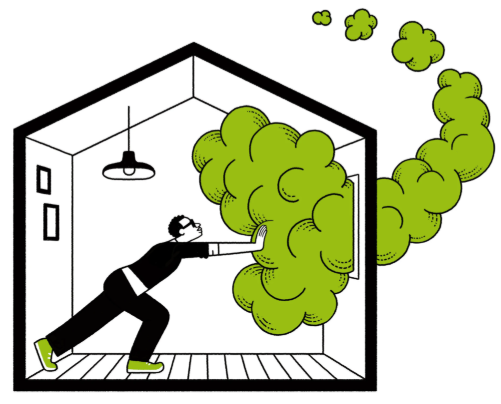
During times of bushfire or other outdoor pollutants, it is important to have a plan before the emergency strikes. Seal your home or workplace as well as you can before you can smell the smoke inside and activate an air purifier with a suitable high efficiency particulate air (HEPA) filter to manage the gases and particulate matter that will find a way into the building. Wear a P2 or N95 respirator mask and do not open the doors and windows until the outside air quality improves.
You can learn more about indoor air quality and the CASANZ site, at the Department of Health, Disability and Aging Indoor Air Quality page, and at the World Health Organisation (WHO) Household air pollution factsheet.
Read more about indoor air quality in schools, homes and workplaces from some of the experts at the Indoor Air Quality Conference 2025: