Hi Renata – What is the law around productivity versus safety in the transport industry?
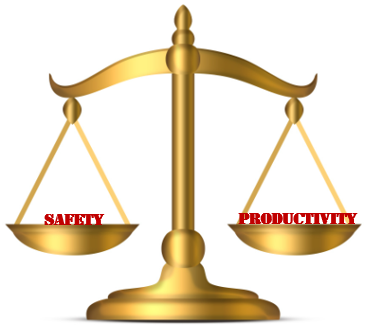
Thank you for your question about productivity versus safety. This is an age-old question asked in workplaces all across the world. Here in Australia the law is very clear – safety must be the priority.
The duties imposed on employers by the OHS Act to provide a safe workplace are not reduced or removed by an employer’s desire to increase productivity or profits. Part 3 of the Act places duties on, among others, employers (sections 21 to 23), self-employed persons (section 24), persons who manage or control workplaces (section 26), designers of plant (section 27), designers of buildings or structures (section 28), manufacturers of plant or substances (section 29), suppliers of plant or substances (section 30), and persons installing, erecting or commissioning plant (section 31), to ensure health and safety. These duties must be met so far as is reasonably practicable.
Section 20(2) of the Act requires that consideration be given to the following matters in determining what is (or was at a particular time) reasonably practicable in relation to ensuring health and safety:
- the likelihood of the hazard or risk concerned eventuating
- the degree of harm that would result if the hazard or risk eventuated
- what the person concerned knows, or ought reasonably to know, about the hazard or risk and any ways of eliminating or reducing the hazard or risk
- the availability and suitability of ways to eliminate or reduce the hazard or risk
- the cost of eliminating or reducing the hazard or risk
Many employers jump straight to the last consideration – cost – in justifying their safety investment decisions. However, WorkSafe emphasises the requirement of the OHS Act – there must be a clear presumption in favour of safety. In determining whether a particular level of expenditure is reasonable in the circumstances, the duty-holder must have regard to the:
- likelihood and degree of harm of the hazard or risk; and
- the reduction of the likelihood and/or degree of harm that will result if the control measure is adopted.
The greater the likelihood of the hazard or risk concerned eventuating, and/or the greater the degree of harm that would result if the hazard or risk eventuated, the less weight should be given to the cost of eliminating the hazard or risk.
WorkSafe publishes a “How WorkSafe applies the law in relation to Reasonably Practicable” position statement to clarify this issue for employers.
In a recent decision from the South Australian Employment Tribunal (SAET) Australian Rail, Tram and Bus Industry Union v Pacific National Services Pty Ltd [2025] SAET 70 (15 July 2025) the tribunal’s ruling confirms that “employers can’t bend the rules or put profits before safety”.
You may also find the recent MUA win at Hutchinson Ports interesting – this story highlights evidence that using automation to “improve productivity” is often misguided. Evidence from international container operations shows that automated container terminals are not as productive as those employing highly skilled Stevedores, are consistently slower and more expensive, and are less safe for workers.
The International Transport Forum (an intergovernmental organisation with 63 member countries) itself acknowledged the shortfalls of automation in their Container Port Automation: Impacts and Implications policy analysis. It is often assumed that the safety and health of terminal workers is improved by automation. However, there is little robust empirical data to support this assumption. In fact, several automated ports have been confronted with accidents related to automated equipment. Two such incidents prompted the port authority of Auckland in New Zealand to temporarily halt the usage of automated straddle carriers in 2021 out of safety, ultimately costing the company at least $65M.
If your employer is proposing changes in the name of improved productivity they must consult with affected employees and their HSRs before making a decision about the proposed changes. Your employer has a duty under s.35 of the OHS Act to ensure consultation on these matters. If you believe that your employer is not consulting in good faith, I urge you to contact your union directly for support and guidance.
Speak with the other HSRs at your workplace and come up with a plan to address your concerns with management. Formally request consultation on this issue with your employer – you can use our Consultation Email template. And don’t forget to keep a Record of Consultation so that you have evidence of what was said and when.
If you have any questions about OHS we encourage to fill out an Ask Renata query and one of our officials will get back to you shortly. Alternatively give Ask Renatabot a try!