Hi Renata - Our manager says that we shouldn’t report incidents or issues if no-one got hurt. Is this right?
Your employer has a duty under the OHS Act to provide and maintain a safe workplace, to have systems in place to identify and control risks, and to consult with workers about safety matters.
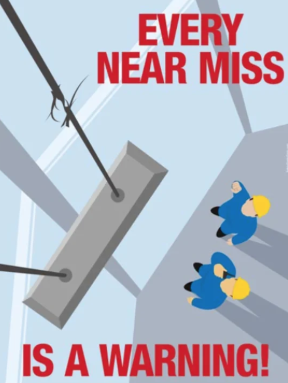
A near miss is any unplanned event that could have resulted in injury, illness, or damage, and that had the potential to cause harm but didn't (this time) – for example: a forklift nearly hitting someone, an unsecured load almost falling, someone slipping on a wet floor but not actually falling. A near miss is an uncontrolled hazard waving a big red flag!
Near miss reporting is a vital and important part of workplace safety that helps prevent serious injuries and fatalities. The more near miss incidents we report, the more likely it is that we will identify and remedy hazards before they injure someone. Employers who only address hazards after they have injured someone are not complying with their duties and obligations under the OHS Act. Don’t forget that under the OHS Act employers are prosecuted for failing to control risk, not necessarily on the outcomes of that failure.
When a near miss occurs, you should proceed with the reporting process in exactly the same way as you would for an incident -
- Make sure the area is safe
- Report to your HSR or employee representative immediately
- Document the incident while details are fresh
- Talk to your HSR about the near miss and what happens next
Your notes and report about a near miss should include date, time and location, a clear description of what happened, what could have happened (the potential consequences), any contributing factors you noticed, any witnesses present, and suggestions of any potential preventive measures (if you can think of any).
Your employer should respond to the reporting of a near miss with a risk assessment and investigation to determine possible control measures. These actions must be undertaken in consultation with HSRs and employees. Once controls have been determined the outcome must be communicated to employees and the controls implemented and reviewed.
If nothing happens after you report a near miss, follow up with your employer in writing and speak with your union. If the hazard remains unaddressed after requesting resolution, contact your union and WorkSafe.
HSRs can use their powers to address OHS issues in the workplace to ensure they are resolved –
- Access near miss reports and investigation findings
- Issue a Provisional Improvement Notice (PIN) under Section 60 of the OHS Act
- Request WorkSafe inspectors attend the workplace
- Direct workers to cease unsafe work in immediate danger situations
When reporting hazards in your workplace be sure to keep your own copies of all reports, make a note of any verbal reports in writing, and track follow-up actions (or failures.
You have a right to report safety concerns at work without fear of discrimination, to raise issues about near misses with your employer, and to be protected from dismissal or adverse action for reporting.
Remember: Every near miss is a free lesson that could prevent a serious injury!