Hi Renata – My boss has replaced the old forklift in our workplace – I don’t think the new forklift has all of the safety features that the old one had. What is the requirement for forklift safety features and is there any standard about this?
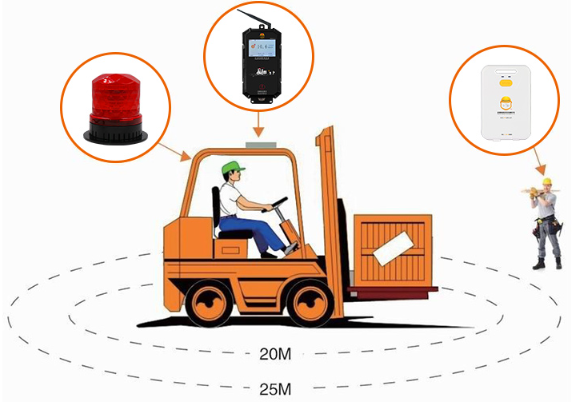
The Act and Regulations give direction on what is expected. Regulation 113 states:
"An employer or self-employed person must ensure that an industrial lift truck is fitted with warning devices that are appropriate to effectively warn persons who may be at risk from the movement of the industrial lift truck."
WorkSafe guidance explains this requirement, stating that "a mix of high volume alarms and horns coupled with flashing lights best warn pedestrians of approaching forklifts. Flashing lights are imperative in areas with high levels of ambient workplace noise."
To resolve this issue and ensure that your workplace forklift is not posing an unnecessary risk, I suggest the following:
- Undertake a risk assessment: The key here is that, per the Regulations, the lights and other safety devices must be "appropriate to effectively warn persons who may be at risk". How is your workplace forklift not doing this? How are people being placed at risk? Where do people or other forklifts interact with the forklift in question?
- What do other forklifts (or previous forklifts) onsite have in the way of lights, sensors and other safety device? Why is this option better/safer?
- What is the suggested control? Will lights, sensors and other devices adequately reduce the risk presented to workers near forklifts? One of the best ways of avoiding incidents is to effectively separate powered mobile plant from pedestrians, including truck drivers, thereby reducing the risk of forklift-related injuries. This could be by updating the traffic management plan and installing barriers to prevent forklift/pedestrian interactions (engineering controls), reviewing the systems of work to identify incident hotspots, and pedestrian or forklift exclusion zones and LOTO procedures (administrative controls).
Of course, knowing your rights is only half the battle. Workers need to have the power to enforce our rights under the law and do so in a way that maintains a good working relationship with their employers. I would advise you to put your concerns in writing to management and then, if a solution cannot be easily negotiated, I would encourage you to reach out to your union. It may be appropriate to issue a PIN if your employer continues to fail to address this hazard, or even, given that the threat is immediate and the degree of risk involved, a direction to cease work with that forklift.
For more information about forklift safety, check out our OHS Reps page Forklift safety. For your employer there is the WorkSafe publication Compliance Code: Plant, which details controls for specific risks associated with plant and their guidance on Developing a forklift traffic management plan.