As spring warms up and we see weed growth exploding, now is a good time to remind ourselves of the dangers of exposure to glyphosate, which is contained in numerous weed killer products, such as RoundUp. Whether you work in local government, national parks, agriculture, horticulture or forestry (or if you just have your own private jungle in your backyard), remember that the WHO International Agency for Research on Cancer (IARC) has said there is strong evidence that exposure to glyphosate causes cancer, and take extra care to protect your health.
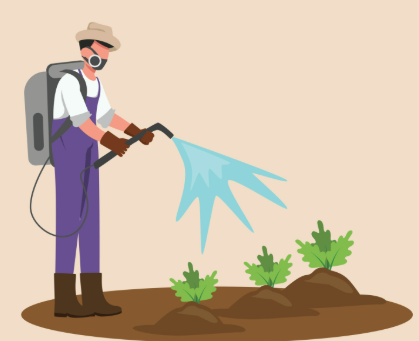
In March 2015, the International Agency for Research on Cancer (IARC) classified glyphosate as "probably carcinogenic to humans". Since then, Monsanto and Bayer (which acquired Monsanto in 2018) have been the subject of hundreds of legal cases on the dangers of Roundup, mainly in the US but also in Europe.
Bayer has paid out billions of dollars in US lawsuits brought by people claiming they developed cancer after exposure to its glyphosate-containing weed killers, including its popular Roundup herbicide. Now the company is fighting these cases on fronts other than trial courts.
Bayer, with the support of conventional agricultural groups, is asking US state legislatures and the US Supreme Court to block lawsuits that are against chemical makers and that claim that exposure to a federally approved pesticide caused cancer in a person. The company seeks a ruling that the nation’s pesticide law, the Federal Insecticide, Fungicide, and Rodenticide Act (FIFRA), bars these personal injury suits.
Litigation over glyphosate led Bayer to remove it from US consumer products in 2023. Now Bayer says continual personal injury lawsuits could force it to stop or reduce the industrial sale of glyphosate, a chemical that conventional US farming relies on heavily for growing commodity crops, including soybeans and corn.
In December 2024 the Pesticide Action Network (PAN) Europe and its members ClientEarth, Générations Futures, GLOBAL 2000, Pesticide Action Network Germany and Pesticide Action Network Netherlands challenged the European Union’s approval of glyphosate before the European Court of Justice. The organisations presented a robust scientific and legal analysis to the European Court of Justice, highlighting serious shortcomings in the assessment of glyphosate in Europe.
A class-action case here in Australia in 2024 on behalf of all people who have been diagnosed with non-Hodgkin lymphoma (NHL) due to using or being exposed to Roundup or Monsanto-branded herbicide products that contained glyphosate was not successful.
Nevertheless, the Australian Workers Union (AWU) has been running a ‘Don’t Risk Roundup’ campaign since 2019 reminding workers across Australia of the dangers associated with glyphosate exposure. The AWU’s campaign focuses on preventing workers from being exposed to glyphosate by substituting it with a safer product and reminds employers of their duties and obligations under the OHS Act to effectively control hazards arising from the use of substances in their workplace.
Employers are required to ensure they have up-to-date safety data sheets (SDS) for any glyphosate containing products, and if necessary, obtain an updated SDS from their supplier as soon as possible.
Employers must also control any risk to health associated with the use of glyphosate in accordance with a hierarchy of control measures (regulation 163). Specifically, employers must consider whether any risk can be eliminated, so far as is reasonably practicable. If this is not reasonably practicable, employers must reduce the risk by substitution, isolation of employees from the source of exposure, by using engineering controls or a combination of these.
This includes asking the following questions –
- Can the use of glyphosate can be eliminated by the use of alternative weed control methods (such as mechanical slashing) that present lower risks?
- Is a registered ready-to-use diluted form of the herbicide available?
- Can the herbicide be applied by a means which will not generate an aerosol (such as a weed wand, coarse spray or low- to-ground spray technique)? Spraying should also be avoided during very windy conditions to minimise the possibility of exposure to spray drift. Check the weather apps before planning to spray.
When working with glyphosate, your employer must also provide you with, at a minimum:
- Personal protective equipment (PPE) including overalls, aprons, footwear, chemical-resistant gloves, glasses and face shields – which must be the correct size and maintained appropriately.
- Comprehensive training and instruction on the risks and use of glyphosate.
- Regular health monitoring including chest x-rays, spirometry (lung function), urine and blood tests.