A transport company specialising in crane truck services has been fined $200,000 after failing to provide the appropriate information, instruction, training or supervision to an employee they instructed to undertake high-risk work alone.
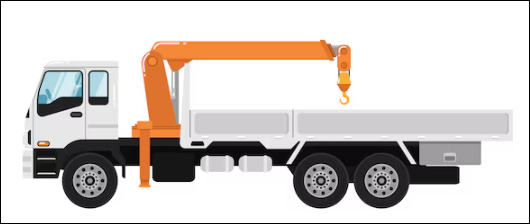
In May 2024, a WVCT Oz employee commenced employment with the company as a truck driver. The role involved delivering and unloading steel frames and trusses using a vehicle-mounted crane. The employee underwent supervised on-the-job training as he did not hold a high-risk work licence. At the beginning of September 2024, the WVCT Oz Operations Manager informed the employee that his training for flat-bed truck driving was complete and that he would now be able to work independently.
The following day the Operations Manager told the employee that he would on this first day of working alone he would be delivering steel trusses to a residential construction site. The employee told the Operations Manager that he did not want to undertake the delivery alone. The Operations Manager responded that if the employee did not go out on the delivery, he would not have a job.
On 3 September 2024, the employee arrived at the construction site to deliver the steel frames and roof trusses. While unloading the trusses using the vehicle-mounted crane, the crane locked out due to an overload. Whilst attempting to reposition the load, the crane slewed and pinned the employee to the ground, breaking his wrist.
WorkSafe alleged that there was a risk of serious injury or death to employees performing the task if they were struck or entrapped by the steel house frames and/or roof trusses while performing the task, and that it was necessary for the offender to supervise its employees whilst performing the task if they did not hold a high-risk work licence.
WVCT Oz pleaded guilty and was with conviction sentenced to pay a fine of $200,000.
In sentencing the offender, the Court noted that WVCT Oz’s conduct was very serious and a clear departure from acceptable safety standards. It also was noted that the WVCT Oz Operations Manager’s direction that if the employee did not go out on the delivery, he would not have a job was a very serious matter.
High-risk work licences are required by Part 3.6 of the OHS Regulations for a range of high-risk activities involving specific plant and equipment, and require a competency-based assessment by an authorised assessor. On-the-job training alone is not sufficient to ensure an individual’s competency to undertake high-risk tasks.
An employer’s duty under s.21(2)(e) of the OHS Act is to provide such information, instruction, training or supervision to employees of the employer as is necessary to enable those persons to perform their work in a way that is safe and without risks to health. There should be no time limit on safety training – if an employee does not feel comfortable in performing a high-risk task, then it is necessary to provide further information, instruction, training and/or supervision to ensure that the employee and those around them remain safe.
Read more: $200,000 fine after unsupervised worker’s crane injury | WorkSafe Victoria