WorkSafe have released new guidance explaining how to create safe temporary timber guardrails to prevent falls from heights.
Timber guardrails play an important role in preventing falls from elevated surfaces. They are a form of passive fall prevention and the second highest order of control to reduce the risk of falls. But their efficacy relies on them being correctly constructed with the correct sizing, materials and strength of components.
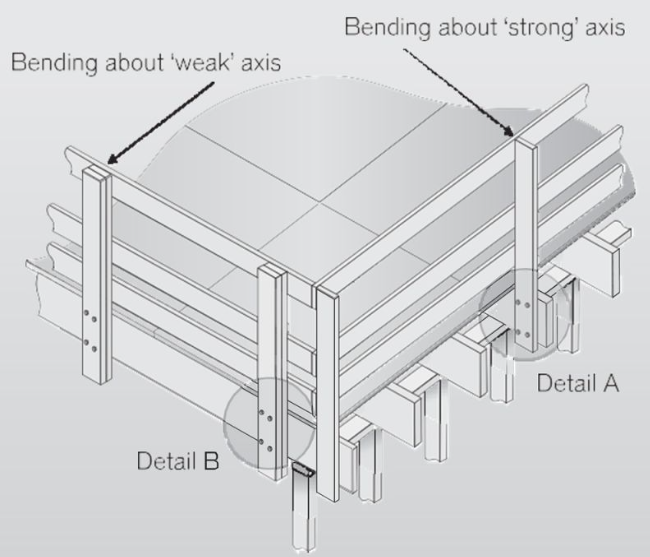
Inadequate timber components used for guard railing can lead to structural failure when under load whilst acting as fall protection. This may cause falls from heights when under normal use. A suitably qualified person, such as a structural engineer should design and assess the guard railing and the guardrail supporting structure. It should also be verified to safely resist all loads imposed by the guard railing system.
In the WorkSafe publication Compliance Code: Prevention of Falls in Housing, the information in tables 3 and 4 of the Prevention of falls in housing compliance code is incorrect. The correct information appears in tables 1 and 2 of this new guidance.
You can find detailed instruction, including diagrams, on the correct specifications and construction requirements at WorkSafe’s guidance Timber guardrailing for fall prevention | WorkSafe Victoria