Hi Renata – Every time we identify a hazard that needs money spent on a control, our employer says the cost is not reasonably practicable for his ‘small, family-run’ business. He won’t discuss with us how he decides this and insists that we should be smart enough to keep ourselves safe with just signs and memos to remind us of the hazards.
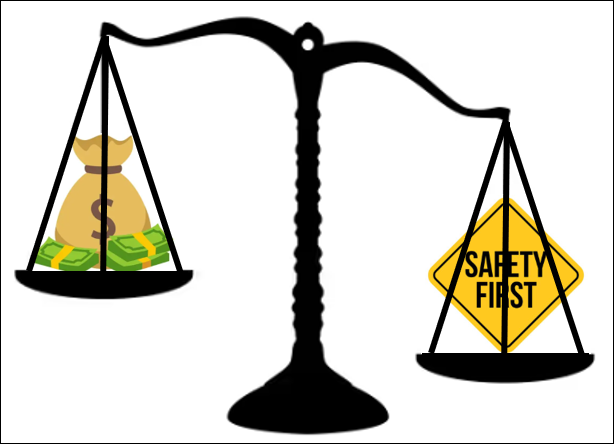
Under the OHS Act your employer must provide and maintain a working environment that is safe and free from risks to health, so far as is reasonably practicable. Your employer may consider that what is ‘reasonably practicable’ is a subjective assessment, but WorkSafe does provide guidance that makes it clear that ‘reasonably practicable’ is not a get-out-of-costs-free card for employers and can be objectively determined.
In short though, if your employer’s response to every hazard is signs and memos, your employer is unlikely to be meeting their duties under the Act.
OHS laws in Australia are not ‘prescriptive’ – that is, they do not mandate how your employer controls hazards – only that they must control them, and that they must consult with employees and HSRs during the issue resolution process to determine the best controls for their specific situation.
When deciding what is ‘reasonably practicable,’ your employer must consider each of the matters set out in s.20(2) of the OHS Act, with a clear presumption in favour of safety. WorkSafe has published guidelines on how they see the law in relation to reasonably practicable here. The objects of the Act require duty-holders to seek out ways to control risk as close to the top of the hierarchy of control as is reasonable in the circumstances.
Careful consideration must be given to each of the matters set out in s.20(2). No single factor determines what is reasonably practicable in relation to ensuring health and safety. The test for what is reasonably practicable involves a careful weighing up of each of the matters in the context of the circumstances and facts of the particular case with a clear presumption in favour of safety.
The factors to be considered in determining what is ‘reasonably practicable’ are:
· the likelihood of the hazard or risk concerned eventuating – s.20(2)(a) - The greater the likelihood of a hazard or risk eventuating, the greater the significance this factor will play when weighing up all matters to be taken into account
· the degree of harm that would result if the hazard or risk eventuated – s.20(2)(b) - The greater the degree of harm that would be likely to result if the hazard or risk eventuated, the greater the significance this factor will play when weighing up all matters to be taken into account
· what the person concerned knows, or ought reasonably to know, about the hazard or risk and any ways of eliminating or reducing the hazard or risk – s.20(2)(c) – Knowledge about the hazard or risk, or any ways of eliminating or reducing the hazard or risk, must be determined objectively by reference to what the person concerned actually knows and what a reasonable person in the duty-holder’s position who is required to comply with the same duty should know. This is commonly referred to as the ‘state of knowledge’. WorkSafe’s position statement on employing or engaging suitably qualified persons to provide health and safety advice offers more information about the skills, knowledge and experience expected of a person managing the safety of a business.
· the availability and suitability of ways to eliminate or reduce the hazard or risk – s.20(2)(d) – a person with an adequate state of knowledge to be managing the safety of a business should have an awareness of what tools or equipment to eliminate or reduce a hazard are available on the open market, or feasible to manufacture, and whether they is suitable to be implemented in their business. If there are no available or suitable ways to eliminate a hazard or risk, it is necessary to consider all available and suitable ways of reducing the risk, so far as is reasonably practicable.
- · the cost of eliminating or reducing the hazard or risk – s.20(2)(e) - There must be a clear presumption in favour of safety. Once the likelihood and degree of harm from a hazard or risk is understood, and the availability and suitability of a relevant safety measure to eliminate or reduce the hazard or risk is established, that safety measure should be implemented unless the cost of doing so is so disproportionate to the benefit (in terms of reducing the severity of the hazard or risk) that it would be clearly unreasonable to justify the expenditure. In determining whether a particular cost is reasonable in the circumstances, the employer must consider the likelihood and degree of harm of the hazard or risk and the reduction of the likelihood and/or degree of harm that will result if the control measure is adopted. The greater the likelihood of the hazard or risk concerned eventuating, and/or the greater the degree of harm that would result if the hazard or risk eventuated, the less weight should be given to the cost of eliminating the hazard or risk.
The question of what is ‘reasonably practicable’ is to be determined objectively, in consultation and on a case-by-case basis, and not simply based on your employer’s capacity to pay or other particular circumstances. If an employer cannot afford to implement a control that is not so disproportionate to the risk as to be clearly unreasonable, then the employer should not engage in the activity that gives rise to that hazard or risk.
If you have any questions about OHS we encourage to fill out an Ask Renata query and one of our officials will get back to you shortly. Alternatively give Ask Renatabot a try!