This months’ WorkSafe HSR News looks at using portable ladders and the impact cold weather has on safety.
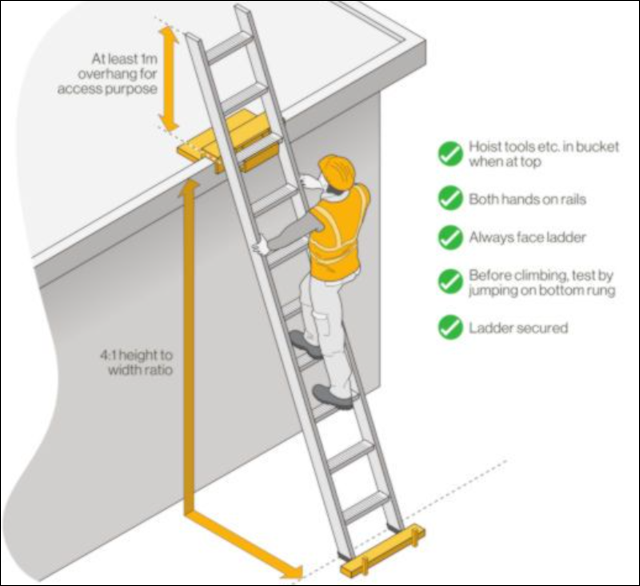
Portable ladders
Falls from any height can seriously injure employees. The risk of serious injury or death increases if you work at heights above 2 metres. Anyone on a ladder is at risk of falling, even at heights below 2 metres. Common hazards associated with ladder use include:
- using damaged, poorly maintained or domestic-grade ladders
- ladders that are incorrectly set up or unsuitable for the task
- lack of controls to prevent a fall from a ladder.
In controlling the hazards associated with working from a ladder, we must look to the fall prevention hierarchy of controls –
- work from the ground or a solid platform
- use a passive fall prevention device e.g. scaffolding or elevated work platform
- use a work positioning system e.g. industrial rope access system or travel restrain system
- use a fall arrest system e.g. an industrial safety net, catch platform or safety harness system other than a travel restraint system
- use an appropriate fixed or portable ladder, or administrative controls
You can learn more about the safe use of ladders, including an example of a ladder safety checklist, at Using portable ladders in the workplace | WorkSafe Victoria.
Cold weather
Winter seems to have arrived suddenly this year, so it is a good time for employers, HSRs and employees to review workplace health and safety practices to ensure they consider the impact of cold, wet or windy weather.
When workers are exposed to cold weather, or work in cold locations, slippery surfaces, difficulty holding or controlling tools, and the risk of cold-related illnesses must be part of risk assessment processes.
This includes:
- identifying and assessing hazards and risks (for example, working in cold conditions)
- deciding how to control those risks
- checking employee welfare facilities
- suggesting changes to the workplace such as plant equipment, or substances used (for example, appropriate PPE - personal protective equipment)
- suggesting changes to how work is carried out.
Being aware of the symptoms of cold-related illness such as hypothermia and ensuring there is a process in place to monitor the wellbeing of employees is essential.
You can find guidance on working in cold conditions and thermal comfort in the Compliance Code: Workplace facilities and the working environment.
Read more: WorkSafe Victoria HSR News | May 2026