Despite repeated calls to not stockpile fuels, WorkSafe is aware of recent panic buying resulting in the unsafe transport and handling of petrol. This behaviour raises safety issues that can lead to explosions, fires, serious injury or death, damage to the environment, and illness or injury arising from exposure to petrol fumes.
Petrol is classified as a dangerous good under the Dangerous Goods Act 1985and associated regulations impose obligations that apply to petrol being stored or handled at both commercial and residential premises, and when being transported in Victoria.
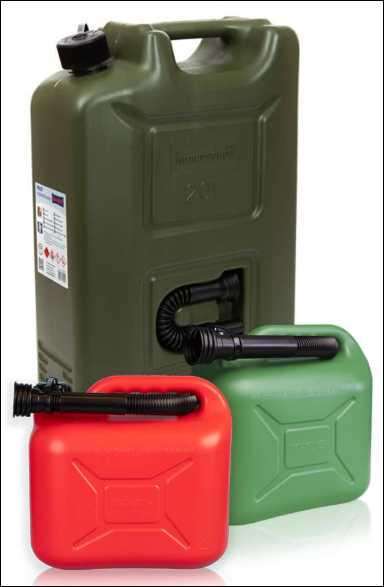
To reduce the risk of harm from stored petrol approved storage containers are required. Only packages that have passed UN performance testing can be used. These are indicated by UN markings as shown below. The Australian Dangerous Goods Code requires portable plastic and metal fuel containers with a capacity of up to 25 litres to comply with Australian Standard 2906 and to display a UN approval marking.
Checking the condition of containers is critical - older or degraded containers might rupture or leak, releasing vapour and therefore the risk of ignition. The use of old (more than five years), damaged, or second-hand containers is not recommended – whilst retail business are required to ensure that the items they sell comply with safety standards, second-hand sales are less regulated.
The use of containers larger than 25 litres is not recommended due to the larger volume increasing the risk of ignition from static electricity. Service stations are required to have in place a system to limit the size of containers being filled with petrol to a maximum of 25 litres.
You can learn more about storing and transporting fuel, and the requirements for safe fuel containers here:
- Dangerous Goods Act and Regulations
- Dangerous Goods: Safety Basics
- Fuel container compliance requirements
- Filling portable fuel containers with flammable liquids at service stations
Read more: Stockpiling of petrol | WorkSafe Victoria