Following the fatal electrocution of a worker while installing an automatic irrigation monitoring system, WorkSafe is issuing a reminder to employers and self-employed persons of the importance of identifying hazards and implementing appropriate controls when working near overhead powerlines.
Whilst installing an automatic irrigation monitoring system near overhead powerlines on a farm the worker was fatally injured by an electrical arc when the six meter aluminium pole they were handling came into close proximity with an overhead powerline. The worker was working alone at the time.
Agriculture makes up just 2% of Victoria's workforce but regularly accounts for about 10% of workplace deaths.
Irrigation installation on farms can involve work near overhead powerlines because irrigation infrastructure often needs to connect to existing power supplies and follow fixed water layouts. This can include:
- Pumps, bores and meters located near existing overhead powerlines or pole-mounted supplies.
- Pipelines, risers and valves that must be installed along fence lines, channels or paddock layouts where powerlines already run.
- Handling long conductive items such as aluminium poles, pipes, risers or antenna masts for telemetry.
- Moving plant and equipment (for example, tractors, excavators or trenchers) into position where access is limited.
It’s important that employers, self-employed persons and workers understand these risks and how to control them.
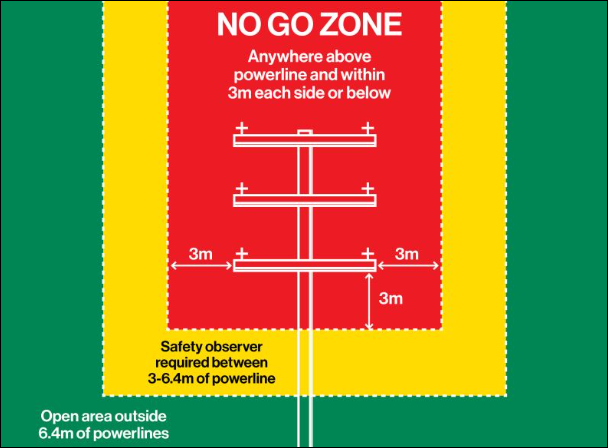
Electricity can jump (also known as arc) from a live wire to plant or equipment that is close to an overhead powerline, even without direct contact. If this occurs, or if contact is made with an overhead powerline, there is an extremely high risk of injury or death. It is important to adhere to the No Go Zone restrictions when working in the vicinity of power lines.
Environmental factors such as sunlight glare, tree cover and line-of-sight distractions can make powerlines difficult to see. Heat and wind can cause the powerline to sag or sway, reducing clearances and increasing the risk of accidental contact. Rain and moisture, including fog and mist, can increase electrical risks by increasing conductivity.
Working alone can increase the risk of harm from accidental contact or an arc from overhead powerlines, including delayed emergency response. Consider the task being undertaken and the proximity to powerlines before commencing solo work.
WorkSafe provides guidance on staying safe around overhead powerlines on farms, as well as when undertaking work near underground services.
Energy Safe Victoria also provide a comprehensive range of information and guidance on how to ensure workers remain safe from harm when working close to electricity sources: