A Coronial inquiry into the death of a worker who was fatally struck when a concrete boom pump snapped has identified that inspections under the current regime for concrete placing equipment may not be "up to the task" of identifying structural faults. The recommendations from this inquiry reiterate those of a recent inquiry into a forklift related fatality - that inspection standards be reviewed and that WorkSafe run a safety campaign to inform equipment owners and operators of their obligations.
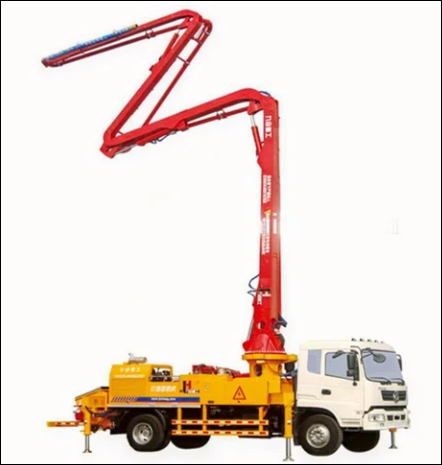
In May 2021 Prisbel Concrete Pumping Pty Ltd employee, 40-year-old Sanel Mujezinovic, was using a remote control to operate a truck-mounted concrete pumping machine to pour a concrete slab when the extended boom pump collapsed at a St Albans construction site. The boom pump struck him on the head and knocked him into the concrete, causing fatal injuries.
A WorkSafe investigation found the 32-metre boom pump collapsed because a metal fatigue crack had caused the king post inside the turret to snap in half.
In 2024 Prisbel was fined $50,000 over the incident, after pleading guilty to breaching the OHS Act by failing to provide a safe work environment.
The Coroner heard that despite Prisbel’s concrete boom pumps undergoing daily and monthly inspections by way of a checklist completed by the pump operator, in addition to a yearly inspection conducted by a "competent person", none of those inspections required the disassembly of the pump to enable inspection of internal components, in particular the king post. Had the concrete pump been subject to a thorough strip-down inspection, the fatigue cracking may have been identified and Mr Mujezinovic’s death prevented.
Under the 1994 Australian Standard for concrete placing equipment the boom pump, which was twenty years old when it was acquired by Prisbel in 2010, should have been subject to a major inspection to test core components after six years of service. Under that Standard a major inspection required the stripping of critical components to allow a complete and thorough inspection.
However, the Standard was updated in 2019 and the new version only required disassembly for a strip-down inspection if a competent person directed it. "Effectively, the competent person has broad discretion to determine the maintenance program for pumping equipment," the Coroner said, adding that their criticism was not directed at the competent person at Prisbel, but rather “at the 2019 Standard itself, which may not be up to the task of uncovering issues with critical internal components such as the king post before they catastrophically fail.”
Coroners Court inquiries into workplace fatalities are a valuable opportunity to learn how similar fatalities can be prevented in the future. To have two Coroners find ‘gaps’ in inspection standards relating to defects or damage of structural components that are not visible during a routine inspection, is a call for action. In addition to highlighting both Coroners’ recommendations for a review of Australian Standards around testing and inspection regimes, these findings should prompt employers to undertake more stringent strip-down inspections of internal equipment components before they cause catastrophic malfunction or failure.
Read more: Finding into Death of Sanel Mujezinovic without Inquest | Coroner's Court Victoria