The adoption of digital work systems in workplaces creates significant physical and psychosocial risks for workers. VTHC’s new Digital Work Systems Standard documents our position on the use of digital work systems and endorses the suggested controls as the minimum protections that must apply whenever digital work systems are introduced or used in Victorian workplaces.
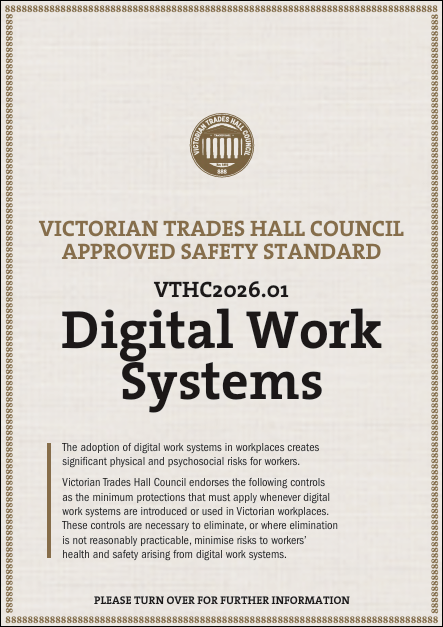
These controls are necessary to eliminate, or where elimination is not reasonably practicable, minimise the risks to workers’ health and safety.
VTHC Standards are endorsed by our Executive and are designed to contribute to the state of knowledge around specific hazards with the goal to protect workers' health and safety and contribute to the improvement of occupational health and safety regulations. They put forward VTHC's position on what the minimum control measures to a specific hazard should be. They provide a resource for HSRs and workers to use when talking about management of specific hazards and are not to be confused with Australian exposure standards.
The Digital Work Systems Standard offers examples of what a digital work system is and identifies common hazards associated with the introduction of such system to a workplace. Clarification is offered around how the hierarchy of controls should be implemented when managing digital work system hazards.
The Standard also includes discussion of the following matters that should be taken into consideration when digital work systems are in use:
- · Employer duties
- · Transparency and privacy
- · Discrimination and disciplinary use
- · Consultation
Go to the Digital Work Systems Standard